DESTINATION GUIDE // KENYA
Tsavo East National Park
Flat, red and enormous. Home of the dust-red elephants and the longest lava flow on earth.
13,747 km2
PARK AREA
Red
ELEPHANTS
290 km
FROM NAIROBI
Jun-Oct
BEST MONTHS
1948
ESTABLISHED
GENERAL OVERVIEW
About Tsavo East National Park
Tsavo East covers 13,747 square kilometres of semi-arid plain in southeastern Kenya, which together with Tsavo West makes the Tsavo ecosystem one of the largest protected areas in the world, larger than Jamaica. It was gazetted in 1948 and split administratively by the Nairobi to Mombasa highway and railway.
Tsavo East is the flatter, drier and more open of the two. Where Tsavo West is volcanic hills and dense bush, Tsavo East is horizon: red earth, scattered baobab and commiphora, and the long green line of the Galana River cutting across it.
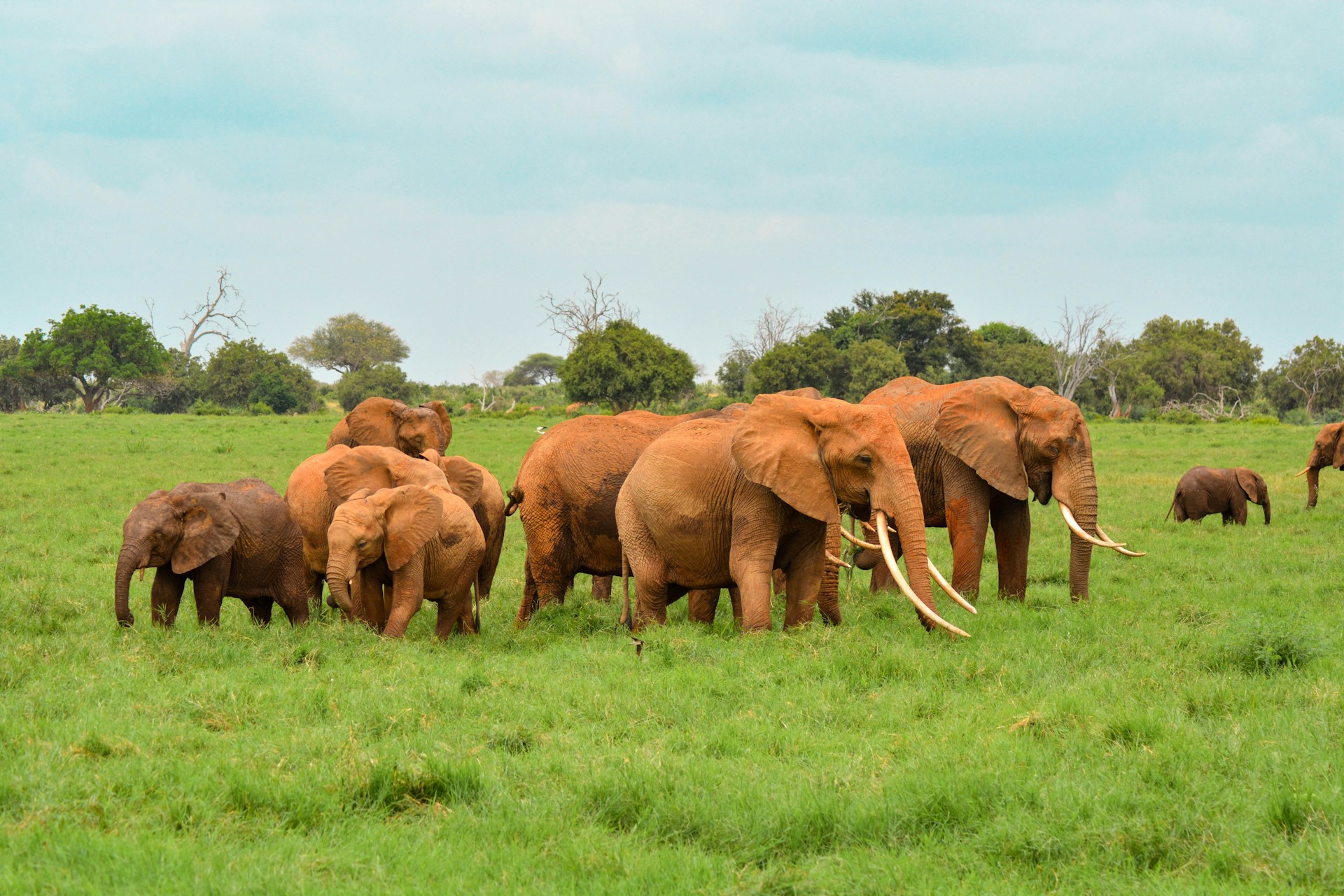
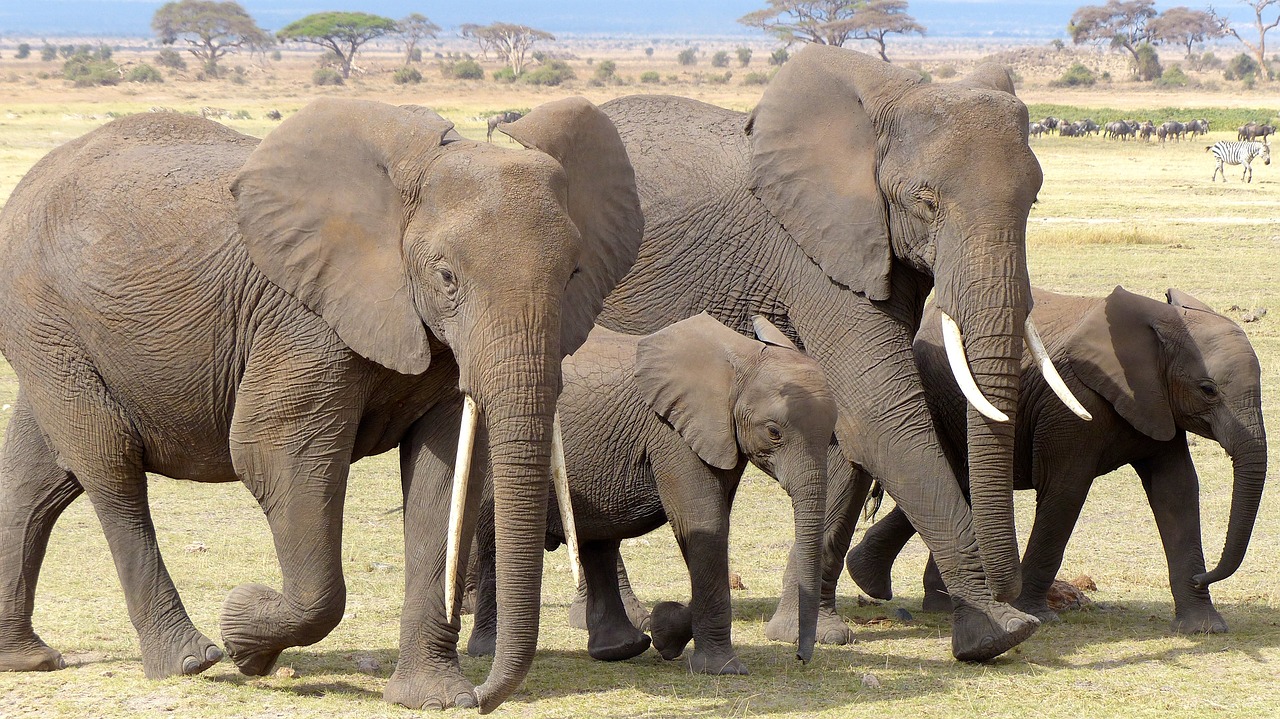
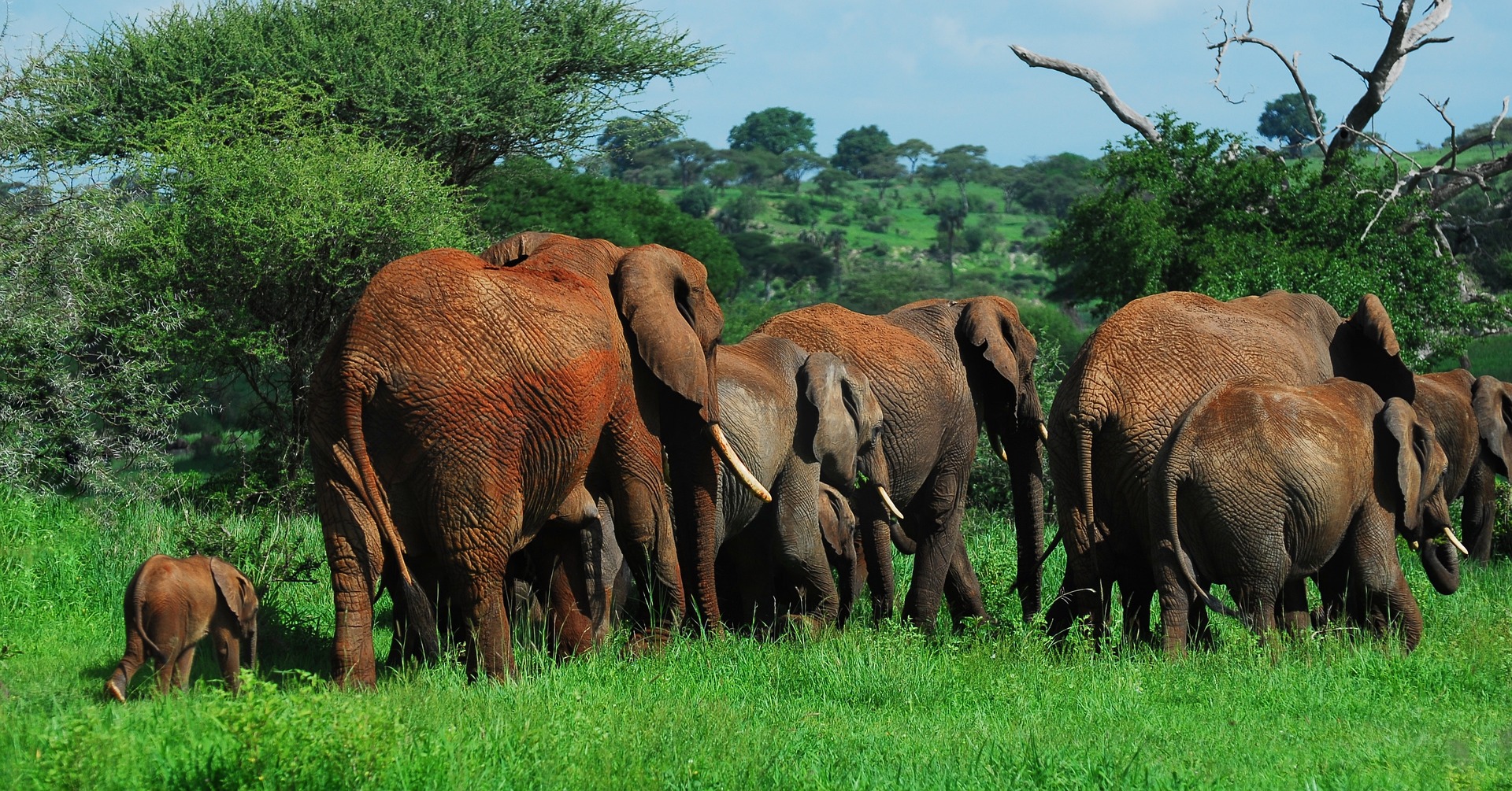
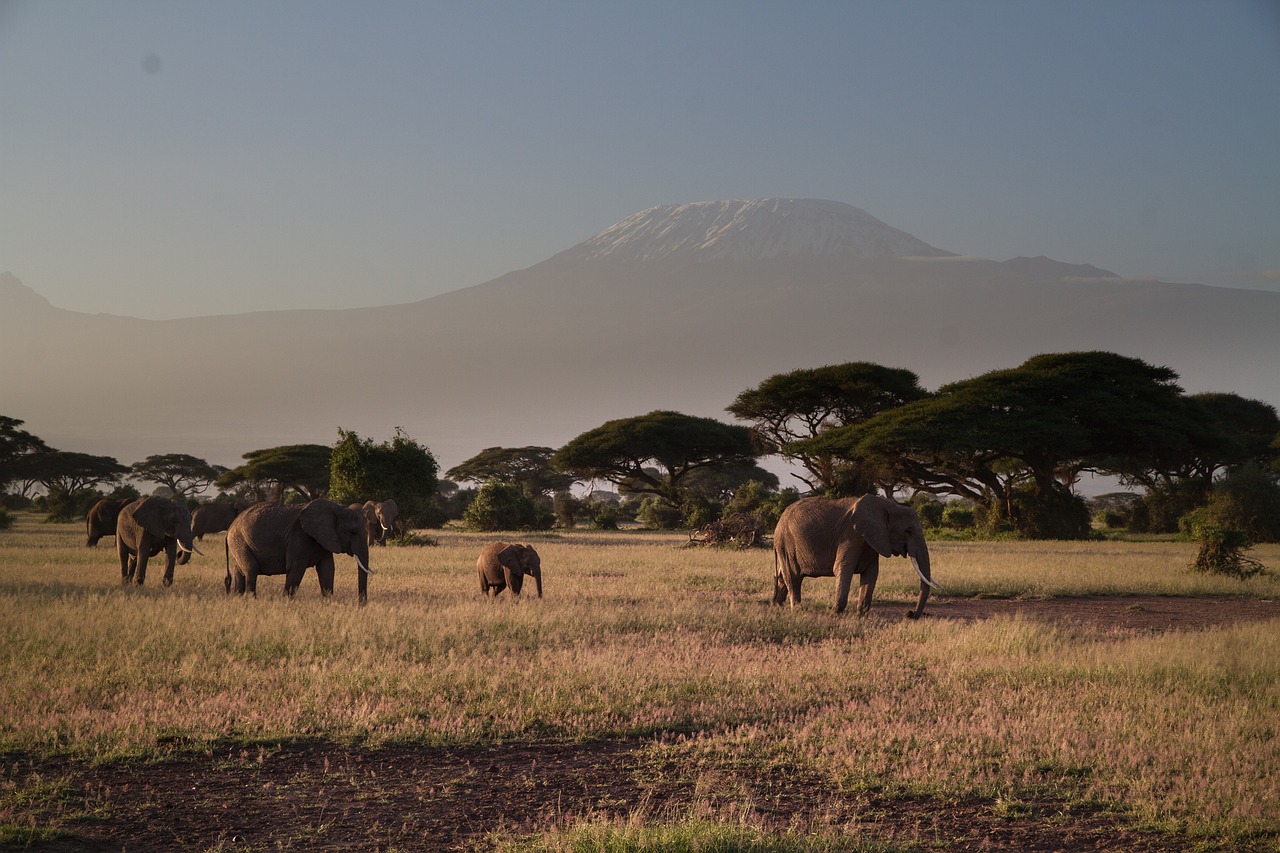
The park is defined by its elephants, and specifically by their colour. Tsavo elephants dust bathe in the region’s red volcanic soil, which stains their hide a deep terracotta and gives them the name red elephants. Herds here can number several hundred.
The other defining feature is the Yatta Plateau, a 290 kilometre lava flow running along the western edge of the park, believed to be the longest in the world.
WILDLIFE
What You Will Actually See
Red elephants. The signature sighting. Very large herds, stained terracotta by the soil, most reliably along the Galana River and at the Aruba and Voi waterholes.
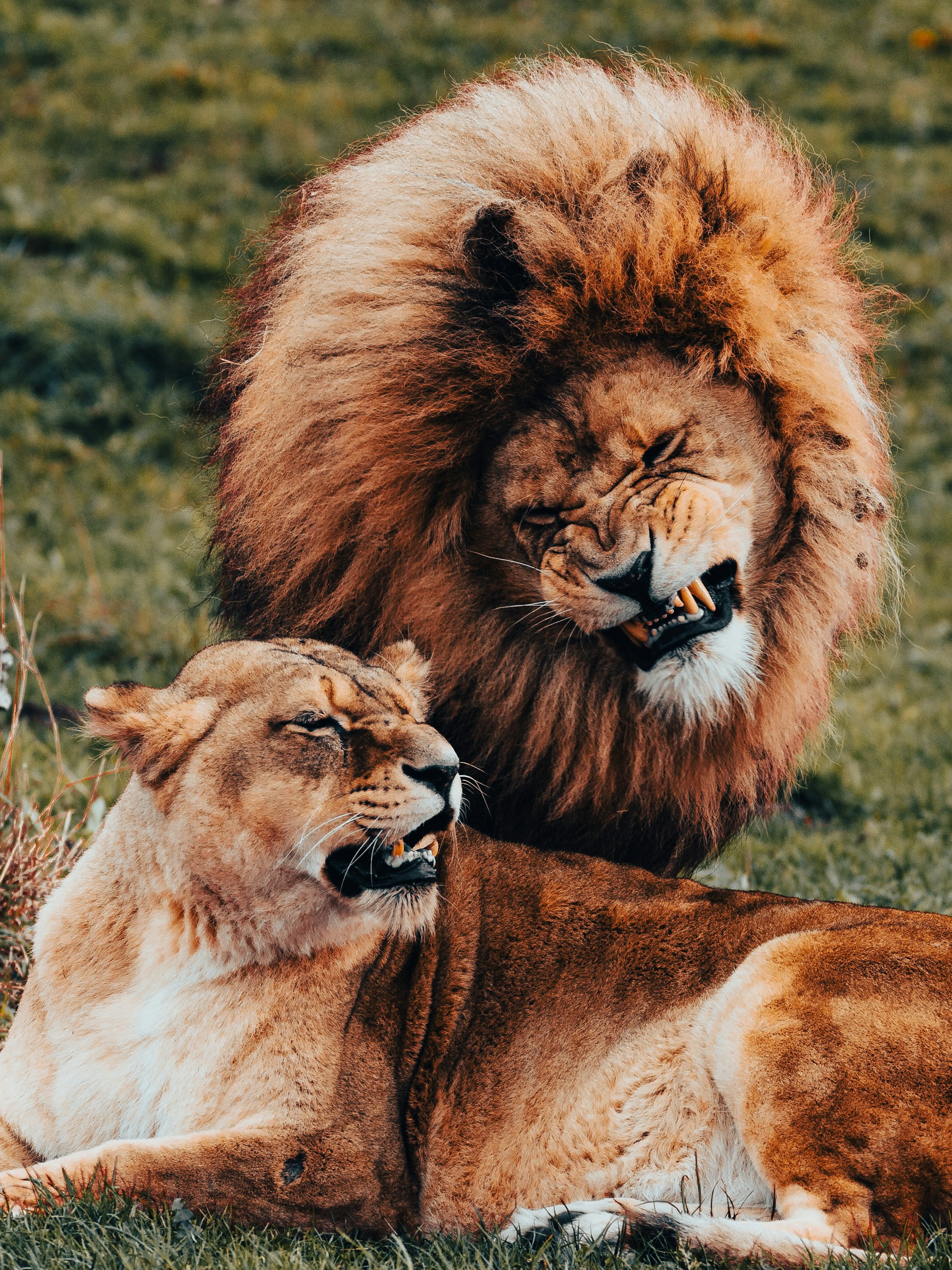
Lion. Resident throughout. Tsavo males are known for being maneless or having very sparse manes, a genuine regional characteristic rather than a story, and this is the region of the 1898 Tsavo man-eaters.
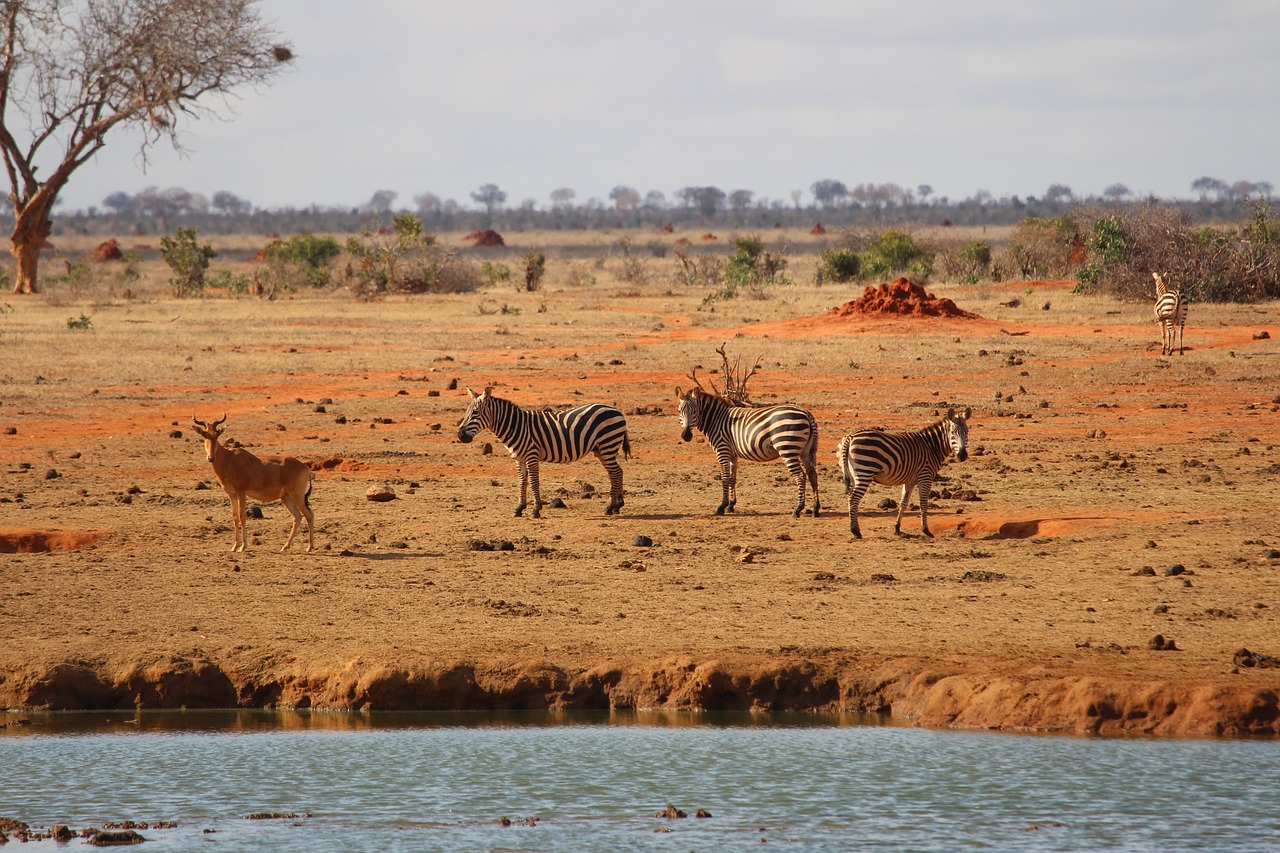
Plains game. Buffalo in large herds, Masai giraffe, Grevy’s and common zebra, oryx, lesser kudu, gerenuk standing on their hind legs to browse, impala, waterbuck and hartebeest.
Other predators. Leopard, cheetah, spotted hyena, striped hyena and African wild dog, which move through in low numbers.
Hippo and crocodile. Along the Galana River and concentrated at Lugard Falls.
Birds. Around 500 species, including ostrich, secretary bird, vulturine guineafowl and the seasonal migrants along the river.
POINTS OF INTEREST
What To See In The Park
Lugard Falls. Not a waterfall in the conventional sense but a series of rapids where the Galana River forces through water sculpted rock. You can walk on the rocks with your guide and crocodiles gather in the pools below.
Mudanda Rock. A 1.6 kilometre outcrop above a natural dam, with a walking track along the top and elephants coming to drink below. One of the few places you can watch game on foot from safety.
Aruba Dam. A man made dam on the Voi River, a magnet for elephant, buffalo and plains game in the dry season.
Yatta Plateau. The 290 kilometre lava flow along the Athi River, thought to be the longest in the world.
Galana River. The green artery of the park, with riverine forest, doum palms, hippo and the best general game viewing.
Voi Safari Lodge waterhole. A viewing hide built into the hillside where you can watch animals at very close quarters.
WHY VISIT
What Tsavo East Is Known For
Scale and space. Tsavo East is enormous and lightly visited, so you can drive for an hour without meeting another vehicle. Travellers coming from the Mara in high season often name this as the thing they remember.
The red elephants are the picture. Very large herds, deep terracotta, moving across open red plain with nothing in the frame but baobab. It looks like nowhere else in Kenya.
Position is the third reason. Tsavo East sits directly on the Nairobi to Mombasa road, which makes it the natural safari half of a safari and beach trip to Diani or Watamu.
Set expectations on density. The park is semi-arid and the bush is thick in places, so wildlife is more dispersed than in the Mara. You work harder for sightings and get more space in return.
ENTRY FEES
Park Fees And Practicalities
Tsavo East sits in the Wilderness category of the Kenya Wildlife Service tariff gazetted in late September 2025 and effective for 2026, the first major revision in nearly eighteen years.
Non-resident adults pay 80 US dollars per person per 24 hours, with children and students at roughly half. Kenyan citizens and residents pay considerably reduced rates in shillings.
Vehicle entry fees apply on top and vary by seating capacity.
All fees are paid through the eCitizen platform in advance. Cash is not accepted at the gate.
A single ticket does not cover both Tsavo East and Tsavo West. They are administratively separate and each charges its own entry, which is worth knowing when planning a combined trip.
We prepay everything and itemise it in your quote.
BEST TIME TO VISIT
When To Go
June to October and January to February, the dry seasons. The best game viewing by a clear margin. Vegetation thins, animals concentrate on the Galana River and the waterholes, and the red dust is at its most photogenic.
March to May, the long rains. The park turns green and the game disperses widely, which makes sightings much harder. Rates drop and the landscape is beautiful, but this is a weak time for wildlife.
November and December, the short rains. Afternoon storms with usable mornings, good birding and reasonable game viewing.
Tsavo is hot. Daytime temperatures regularly exceed 35 degrees and the January to March period is the hottest. Early morning and late afternoon drives are not just better for wildlife, they are considerably more comfortable.
GETTING THERE
How To Reach The Park
By road from Nairobi. Around 325 km to the Voi Gate on the Nairobi to Mombasa highway, five to six hours on good tarmac.
From Mombasa or Diani. About 160 km to Voi, two and a half to three hours, which is why Tsavo East is the standard safari leg on a coast holiday.
Gates. Voi is the main and busiest gate. Manyani and Buchuma are also on the highway. Sala Gate in the east serves the Malindi and Watamu approach.
From Amboseli. Four to five hours via Tsavo West.
By rail. The SGR from Nairobi to Mombasa stops at Voi, and the line runs through the park with wildlife often visible from the train.
By air. Airstrips at Voi, Aruba and Sala take charter flights.
WHERE TO STAY
Lodges And Camps
Galdessa Camp. On the Galana River in the heart of the park, small and well regarded, with the best river frontage.
Satao Camp. Twenty tents around a waterhole that elephants use constantly. One of the most reliable places in Kenya to watch game from your veranda.
Voi Safari Lodge. Built into a hillside above a waterhole with an underground viewing hide, long established and excellent value.
Ashnil Aruba Lodge. Near Aruba Dam, comfortable mid range with strong dry season game viewing.
Sentrim Tsavo East. Tented rooms near Sala Gate, good value and convenient from the coast.
Camping. KWS public campsites at Ndololo and elsewhere for travellers on a tight budget.
Two nights is the usual stay, which gives a full day for the Galana River, Lugard Falls and Mudanda Rock.
SAFETY AND TRAVEL TIPS
What To Know Before You Go
Heat. Tsavo is genuinely hot. Drink far more water than feels necessary, and plan drives for early morning and late afternoon.
Red dust. It gets into everything. Bring dust covers or dry bags for cameras and lenses, and pack a buff or scarf.
Prepay through eCitizen. Cash is not accepted at the gates.
Two separate parks. Tsavo East and Tsavo West charge separately. Budget for both if you are visiting each.
At Lugard Falls and Mudanda Rock. Both allow you out of the vehicle. Stay with your guide, keep back from the water at Lugard, and remember that the crocodiles below are large.
Distances. The park is vast and driving times between features are long. Plan fewer things properly rather than many badly.
Malaria. Low altitude and high risk. Prophylaxis is necessary.
TOURS WITH US
Safaris With Sola Safari Travels
Tsavo East is how we build a safari and beach trip. Two nights here from Nairobi or the coast, then down to Diani or across to Watamu, which turns a beach holiday into a proper Kenyan trip without a long detour.
For travellers wanting more of the ecosystem we pair it with Tsavo West and Mzima Springs, which is a genuinely different landscape an hour and a half away.
eCitizen tickets for each park are prepaid separately, drives are planned around the heat, and the trip runs in a private 4×4 with one of our own guides throughout.
SAFARI PACKAGES
Safaris That Include Tsavo East
Tsavo East is the safari half of most coast itineraries, and the gateway to the wider Tsavo ecosystem. All departures are private.

6 DAYS / 5 NIGHTS
6 Days Tsavo and Diani
Red elephants in Tsavo East and West, then two nights on the white sand at Diani Beach.
From $980 per person
5 DAYS / 4 NIGHTS
5 Days Kenya Wildlife Circuit
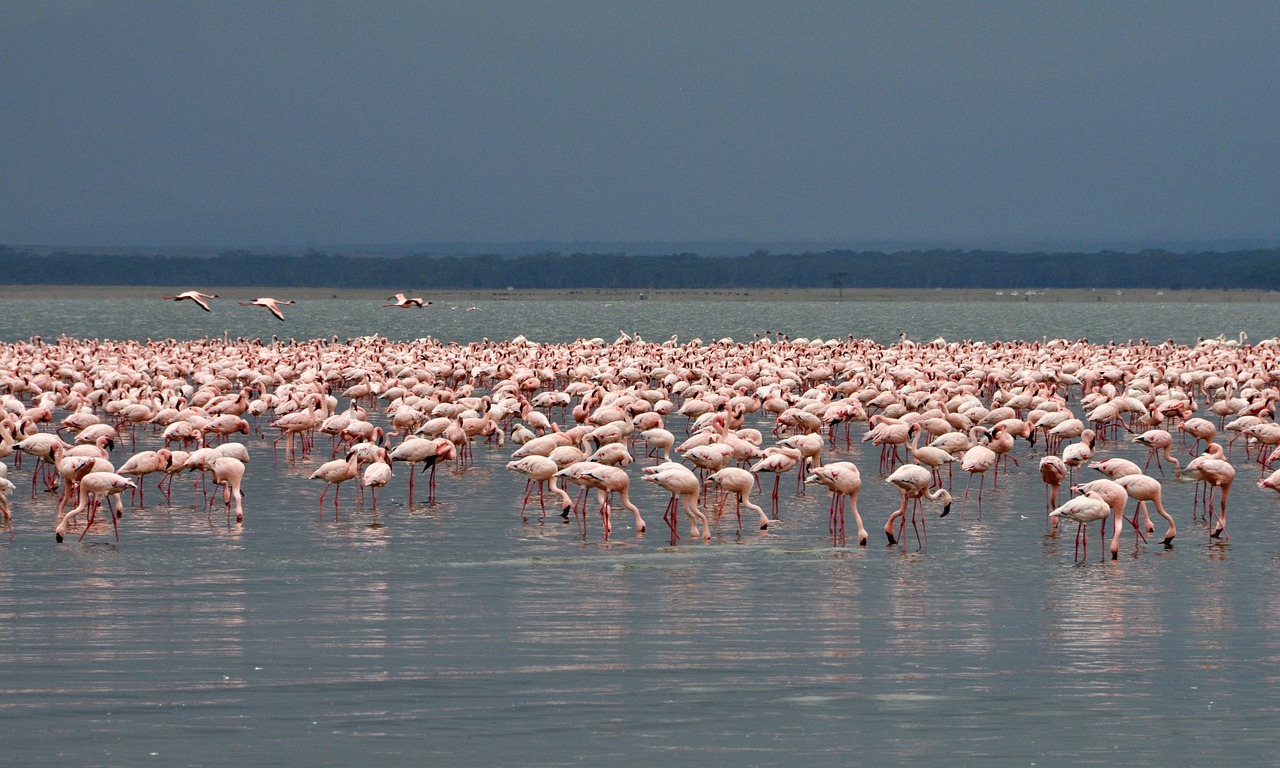
Lake Nakuru, Lake Naivasha and the Masai Mara on the classic Rift Valley circuit.
From $850 per person

10 DAYS / 9 NIGHTS
10 Days Ultimate East Africa
Amboseli, the Masai Mara, the Serengeti and the Ngorongoro Crater at an unhurried pace.
From $2,300 per person
KEY QUESTIONS
Tsavo East Safari, Key Questions
They dust bathe in the region’s red volcanic soil, which stains their hide a deep terracotta. It washes off in rain and they colour themselves again within days. Tsavo herds can number several hundred animals.
80 US dollars per non-resident adult per 24 hours under the KWS tariff effective for 2026, with children and students at roughly half. Vehicle fees apply on top and payment is through eCitizen in advance. Tsavo East and Tsavo West are charged separately.
No. They are administratively separate parks and each charges its own entry fee. If you are visiting both, budget for two sets of fees.
Far bigger, far emptier and considerably drier. Wildlife is more dispersed so you work harder for sightings, but you may drive for an hour without seeing another vehicle. The Mara has the density and the migration, Tsavo has the space and the red elephants.
Yes, and that is its main role. Voi Gate is two and a half to three hours from Mombasa and Diani, which makes two nights in Tsavo East the natural safari half of a beach holiday.
June to October and January to February. The park is semi-arid and in the long rains from March to May the game disperses widely and sightings become much harder, whatever the landscape looks like.
EXPLORE MORE
Pair Tsavo East With Other Destinations
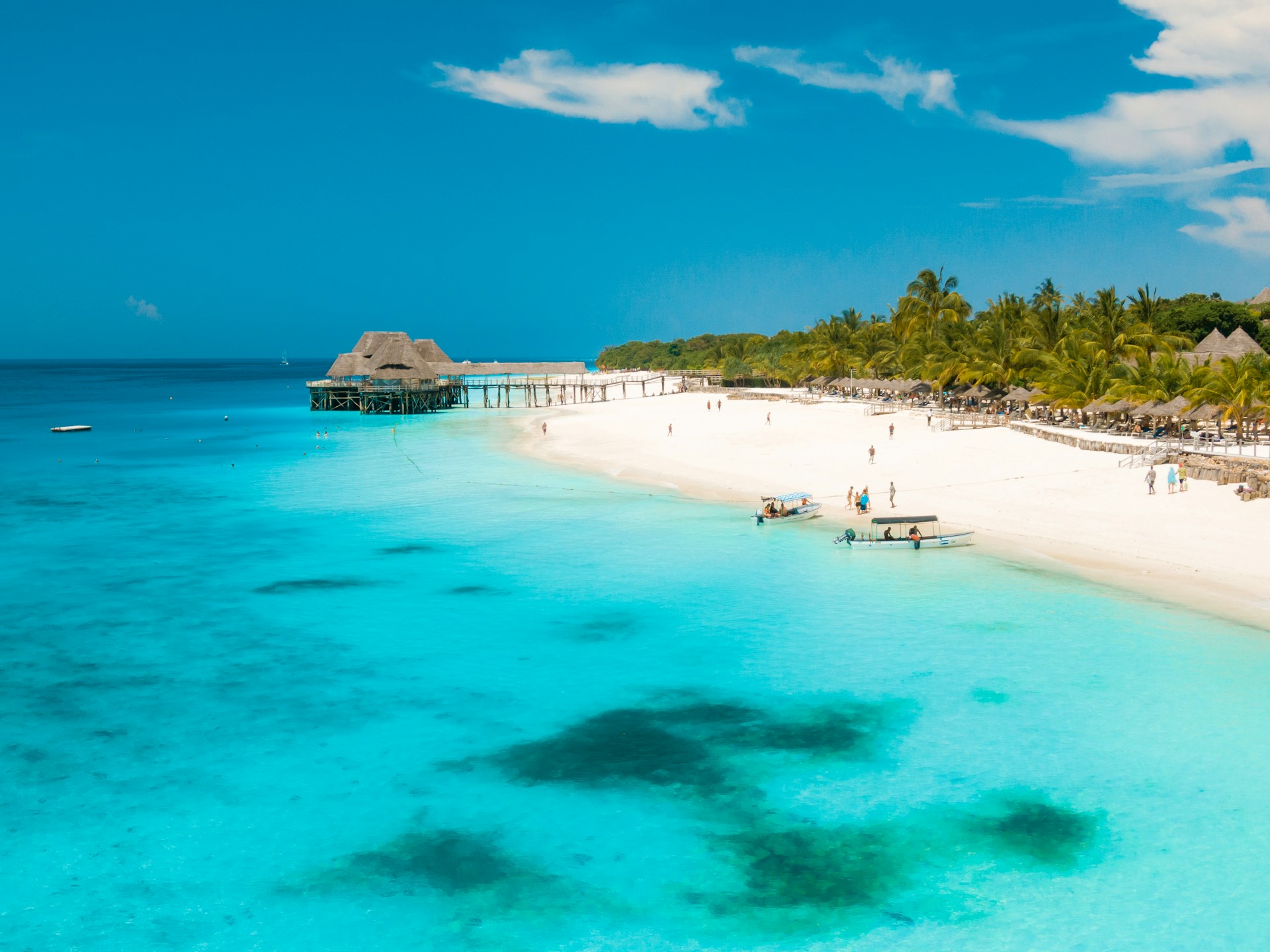
Tsavo sits on the road between Nairobi and the coast, with the beaches a few hours on.

Your Tsavo East Safari Starts Here
Tell us your dates and group size. We will reply within 24 hours with a tailor made proposal and a clear price.
TAILOR MADE SAFARI
Want to Know More? Talk to Us
Create an unforgettable memory with a customised Kenya or Tanzania safari. Tell us how you like to travel and our safari experts will shape the route around you, with no obligation.
Phone: +254 736 992 608
Email: info@solasafaritravels.com