DESTINATION GUIDE // TANZANIA
Serengeti Safari: National Park Travel Guide
Fourteen thousand square kilometres of open plain, 1.5 million wildebeest and the largest lion population in Africa.
14,750 km2
PARK AREA
1.5M
WILDEBEEST
3,000
LIONS
Jul to Oct
RIVER CROSSINGS
500+
BIRD SPECIES
Quick answer: Serengeti National Park covers about 14,750 square kilometres of northern Tanzania and runs to the Kenyan border, where it continues as the Masai Mara. It is reached in about 1 hour by air from Arusha or 7 to 9 hours by road via the Ngorongoro Crater. It holds the annual wildebeest migration and Africa largest lion population.
OVERVIEW AND LOCATION
Serengeti National Park At A Glance
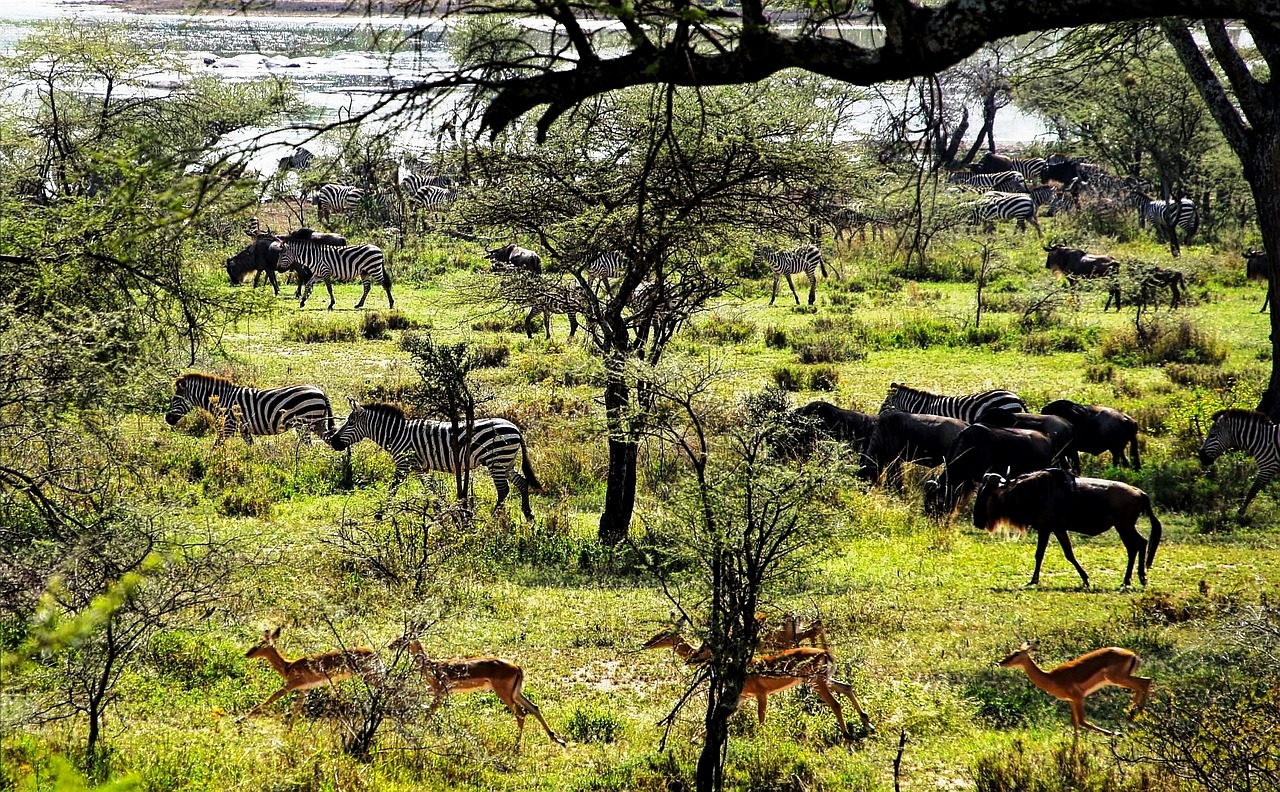
The Serengeti covers around 14,750 square kilometres of northern Tanzania, stretching from the Ngorongoro highlands in the south east to the Kenyan border in the north, where it becomes the Masai Mara. It is roughly ten times the size of the Mara. The name comes from the Maa word siringet, meaning the place where the land runs on forever, which is an accurate description of the southern plains.
History. Declared a game reserve in 1921 and a national park in 1951, the Serengeti is Tanzania oldest park. It was made a UNESCO World Heritage Site in 1981 and forms the core of an ecosystem of about 30,000 square kilometres including Ngorongoro, Maswa, Loliondo, Grumeti and the Masai Mara.
Terrain, by region. The park is large enough that where you stay changes the trip entirely.
| Region | Character | Best months |
|---|---|---|
| Southern plains and Ndutu | Open short grass, almost treeless. Calving grounds | Dec to Mar |
| Central Seronera | Acacia woodland and the Seronera river valley. Resident game year round | All year |
| Western Corridor | Grumeti river and riverine forest, reaching towards Lake Victoria | Jun to Jul |
| Northern Serengeti and Kogatende | Rolling hills and the Mara river crossing points | Jul to Oct |
| Moru Kopjes | Granite outcrops on the southern plains. Rhino and rock art | Jan to Mar |
GETTING THERE
How To Get To The Serengeti
Step one: fly into Tanzania. Most visitors arrive at Kilimanjaro International Airport near Arusha. Arusha Airport handles the light aircraft that go on to the Serengeti airstrips.
Step two: Arusha to the Serengeti.
| Option | Time | What to know |
|---|---|---|
| By air | 1 to 1.5 hours | Daily flights from Arusha to Seronera, Kogatende, Grumeti or Ndutu. The right choice for the north, where the road drive is very long |
| By road | 7 to 9 hours | Via Ngorongoro Crater and the Naabi Hill gate. Long, but the crater rim and the descent onto the plains are worth doing once |
| From the Masai Mara | Road or air | Cross at Isebania by road, or fly Mara to Kogatende in season. Vehicles do not cross, so you change vehicle and guide at the border |
| From Nairobi | 1.5 hours flying | Direct scheduled services to Kogatende and Seronera operate in the high season |
| Between regions | 30 to 60 min flying | The park is vast. Moving from the south to the north is a full day by road, or a short hop by air |
Gate hours. Naabi Hill and the other gates operate between 6am and 6pm, and driving inside the park outside those hours is not permitted.
ENTRY FEES
Serengeti Park Fees
Tanzania National Parks charges per adult per 24 hours and adds 18 per cent VAT on top. Camps inside the park also charge a concession fee per person per night. Between the two, the fixed cost of being in the Serengeti is considerably higher than in Kenya.
| Category | Fee | Notes |
|---|---|---|
| Non-resident adult | USD 83 | Per 24 hours, plus 18 per cent VAT |
| Non-resident child aged 5 to 15 | USD 24 | Per 24 hours, plus 18 per cent VAT. Under 5 enter free |
| Concession fee | USD 60 to 70 per person per night | Charged by camps inside the park, usually in the rate |
| Ngorongoro Crater | Charged separately | Added if you include the crater, which most itineraries do |
Paying at the gate. TANAPA is cashless and card only. Every Sola Safari itinerary includes park fees, concession fees and the crater service fee where applicable, and your guide handles all of it.
TANAPA revises fees annually, usually in July. We confirm the current amount in writing with every quote.
SAFARI COSTS
What A Serengeti Safari Costs
Between park fees, concession fees and VAT, the fixed cost of being in the Serengeti is around USD 150 per person per day before accommodation, food or a vehicle. That is why Tanzania budget safaris are rare and why the entry point is higher than Kenya.
| Style | Per person per day | What you get |
|---|---|---|
| Budget camping | USD 220 to 300 | Shared four wheel drive, public campsites, all park and concession fees |
| Mid range | USD 350 to 550 | Private vehicle, permanent tented camps or lodges, full board |
| Luxury | USD 600 to 1,000 | Small mobile camps that follow the migration, dedicated guide and vehicle |
| Fly-in exclusive | USD 1,000 and above | Light aircraft between regions, exclusive-use camps, balloon included |
What moves the price most. Whether your camp follows the migration. A mobile camp that relocates seasonally puts you within minutes of the herds. A fixed lodge in the centre may be four hours from where the action is in August, and you will spend the trip driving.
Green season savings. March to May is the long rains and rates drop 30 to 40 per cent, with park fees lower too. The southern plains stay excellent through March for calving. April and May are genuinely wet and some camps close.
Balloon safaris. Roughly USD 599 per person, most commonly flown over Seronera or the southern plains, and worth budgeting for separately because it is rarely included.
BEST TIME TO VISIT
When To Go To The Serengeti
The Serengeti has no bad month, but it has very wrong regions. The herds move in a continuous clockwise loop, so the question is never when to come but where to be in the month you can travel.
| Season | Months | Where to be | Crowds |
|---|---|---|---|
| Peak | Jul to Oct | Northern Serengeti and Kogatende for the Mara river crossings | High |
| Calving | Jan to Mar | Southern plains and Ndutu. Calving, and the highest predator activity of the year | Medium to high |
| Shoulder | Jun | Western Corridor and the Grumeti river as the herds move north | Medium |
| Green | Apr to May | Central Seronera. Long rains, lowest rates, some camps closed | Low |
| Transition | Nov to Dec | Short rains push the herds back south. Fresh grass and thin crowds | Low to medium |
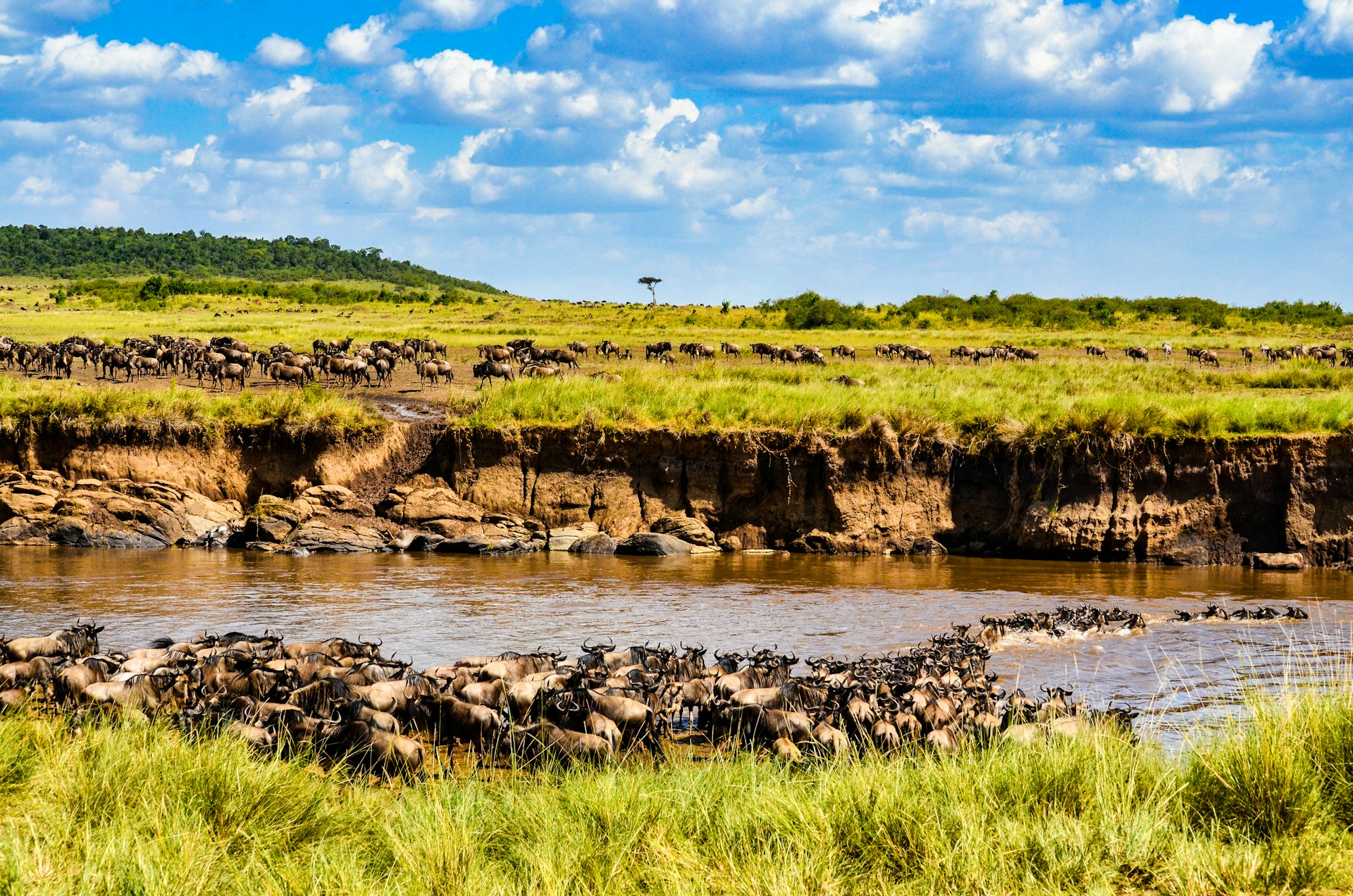
For the river crossings aim at August and September in the far north around Kogatende. Crossings are unpredictable and can happen several times a day or not for a week, so book at least three nights in the north rather than passing through.
For calving and predators come between late January and March to the southern plains. Around 8,000 wildebeest are born a day at the peak, and the concentration of lion, cheetah and hyena that follows is the most intense wildlife spectacle in Africa.
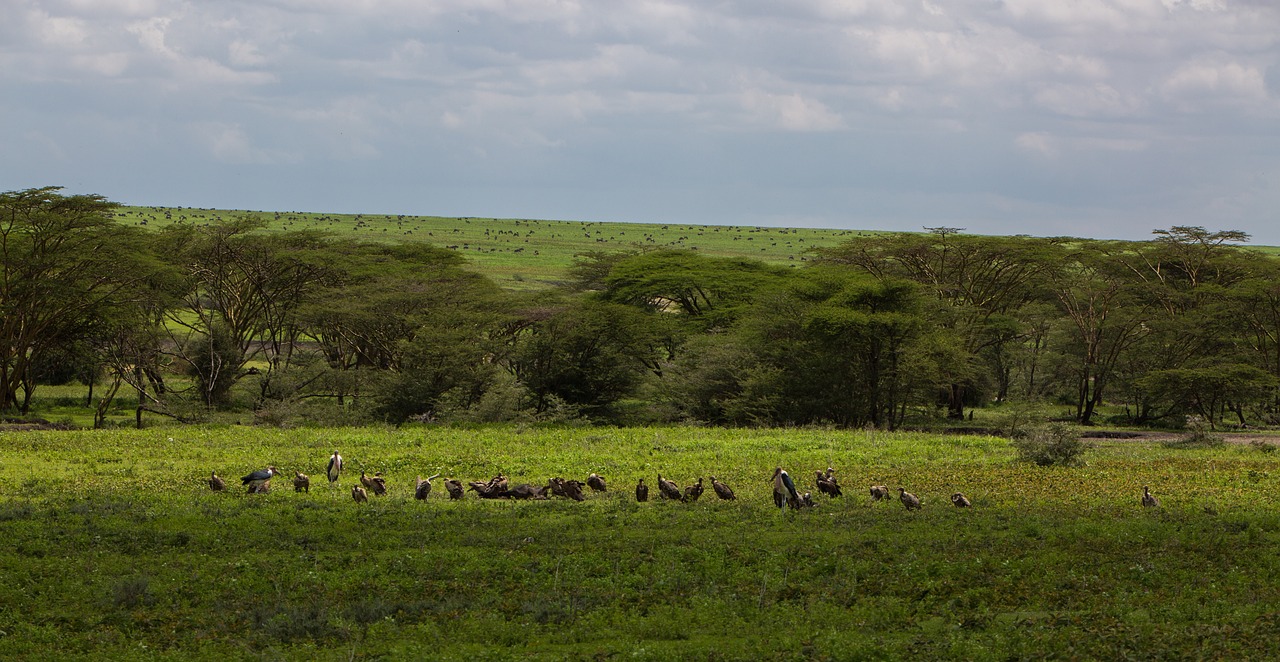
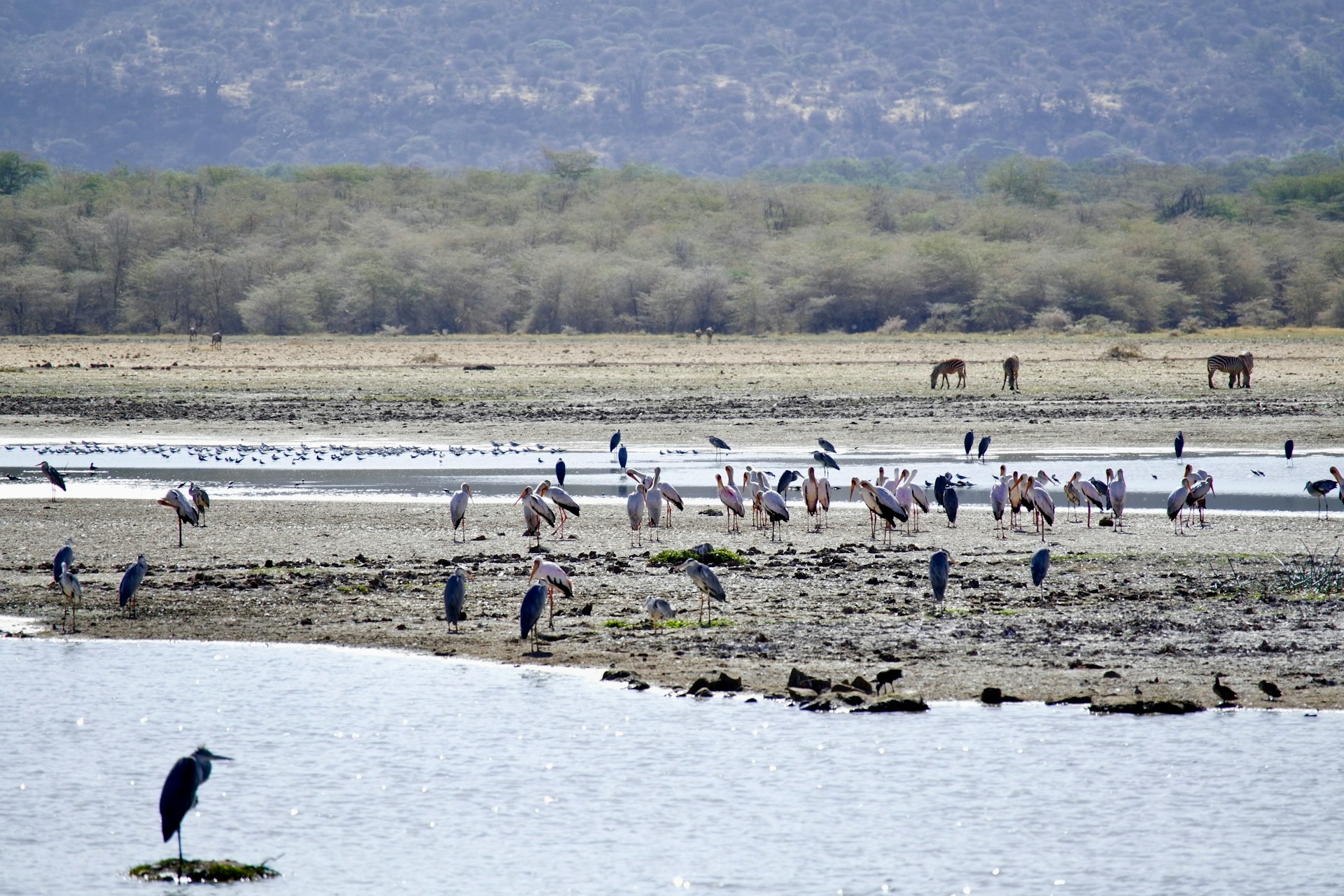
For birdwatching November to April, when migrants arrive and the plains are green. Over 500 species have been recorded in the ecosystem.
WILDLIFE AND ACTIVITIES
What You Will See and Do in the Serengeti
The Serengeti holds the largest terrestrial mammal migration on earth, alongside a resident population that stays put all year. Even outside the migration months the central Seronera valley delivers reliable big cat viewing.
What to expect on a Serengeti safari. Longer distances than the Mara. A day is typically a long morning drive with a packed breakfast, a rest through the heat, then an afternoon drive. Full day drives with a picnic lunch are common because the good areas can be an hour or more from camp.
Wildlife.
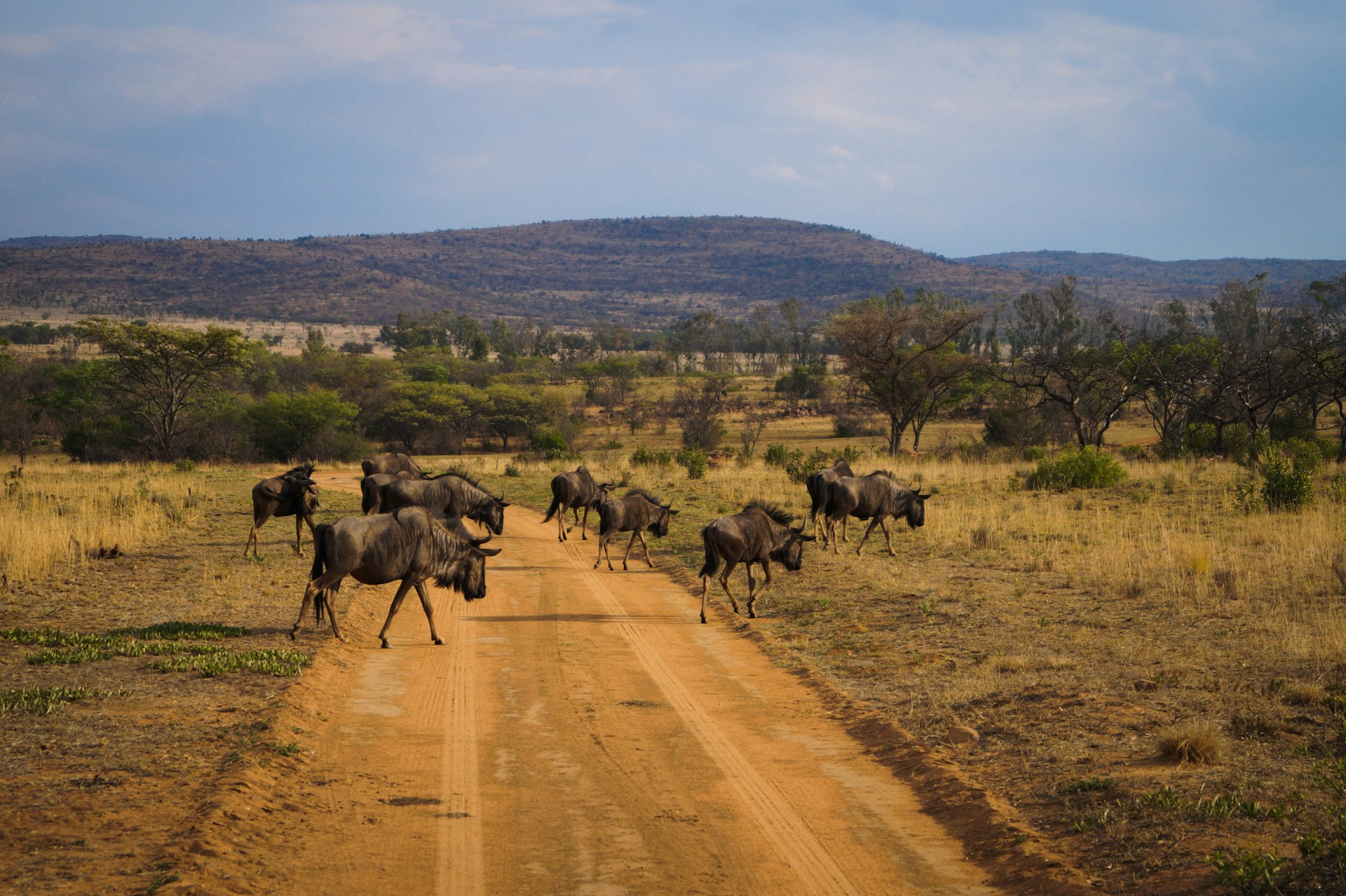
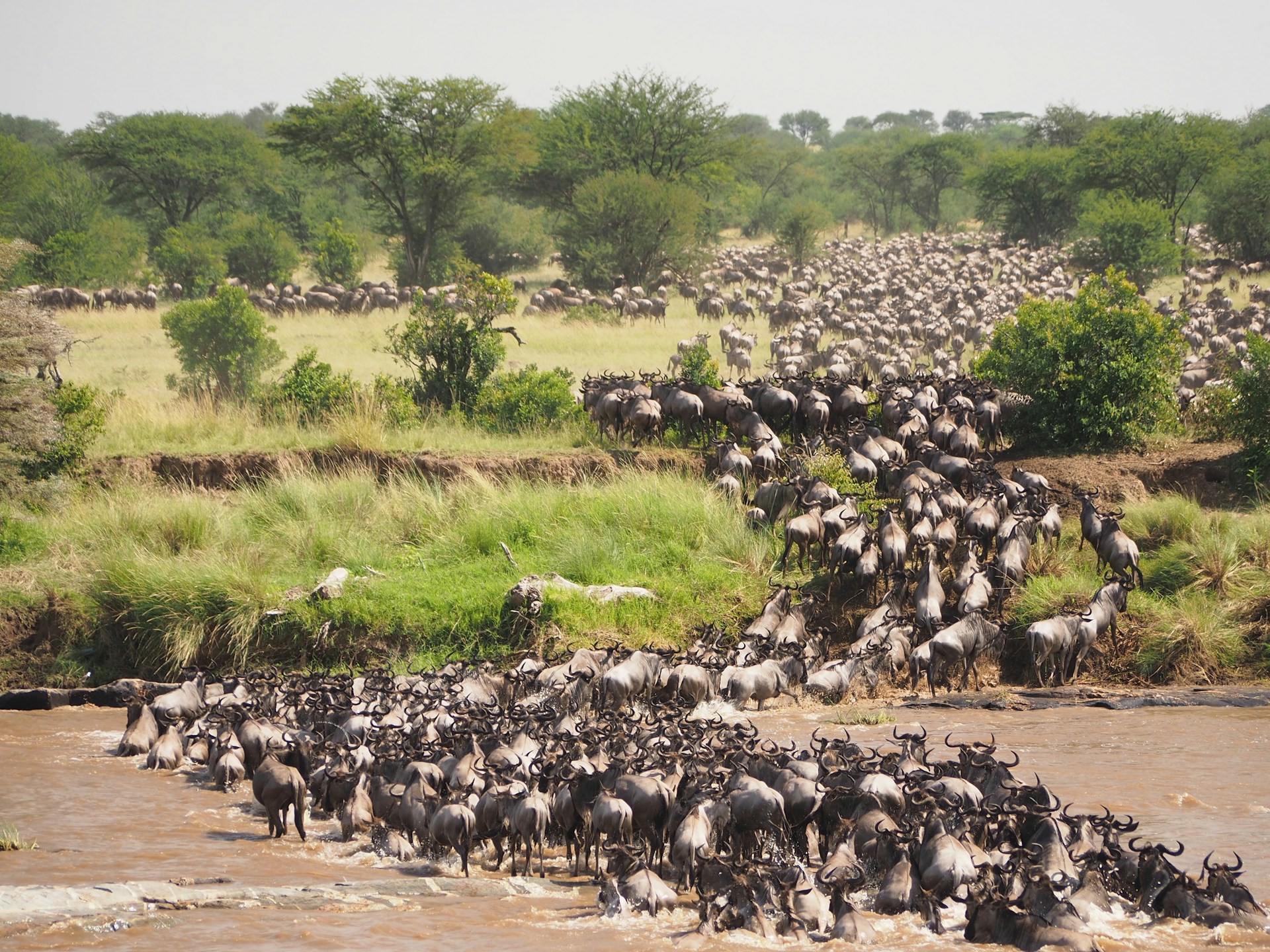
- Around 1.5 million wildebeest plus 250,000 zebra and 400,000 gazelle on the migration
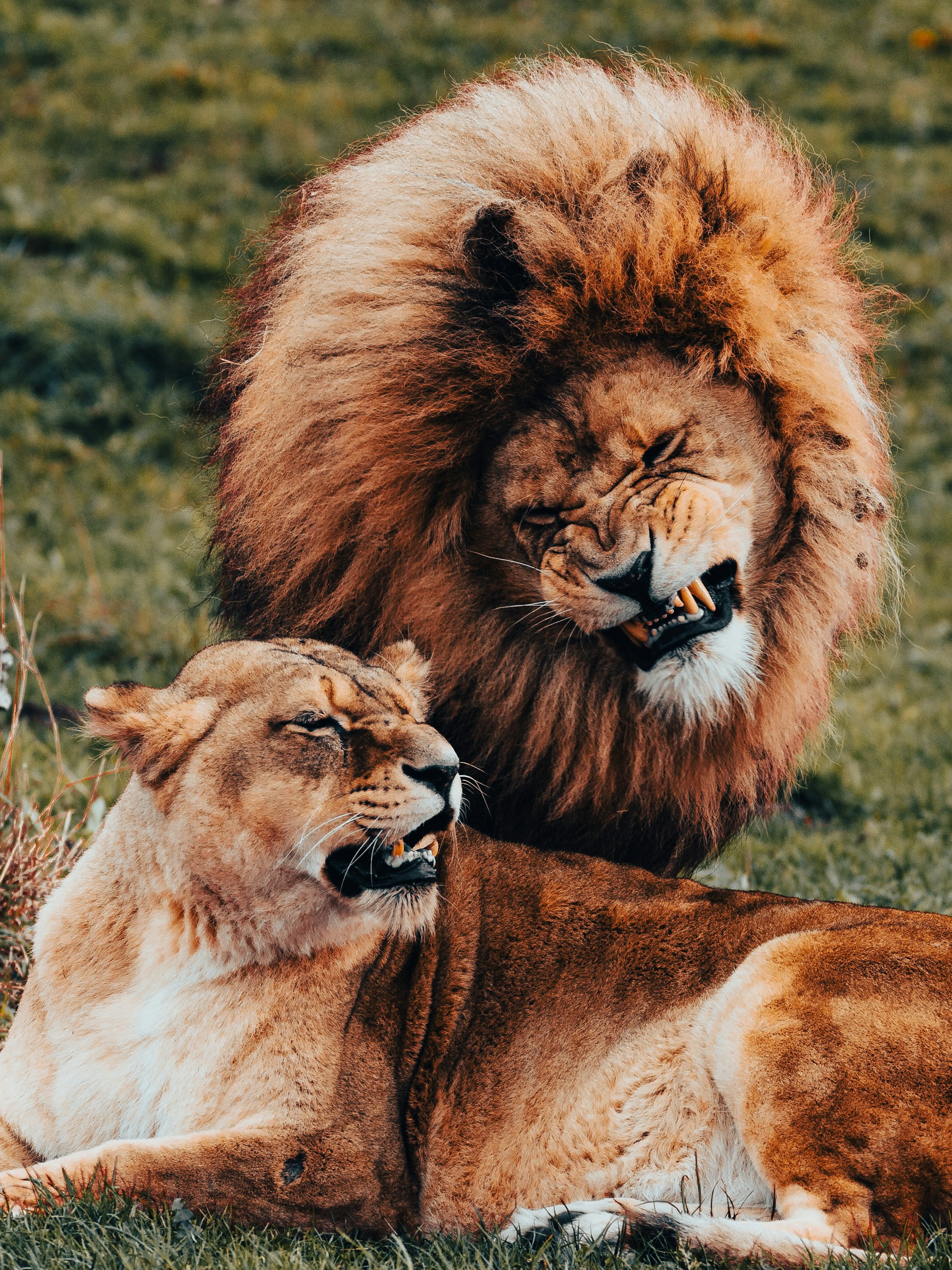
- Lion, roughly 3,000 in the ecosystem, the largest population in Africa
- Leopard in the sausage trees along the Seronera river, one of the most reliable spots anywhere
- Cheetah on the southern short grass plains
- Black rhino in small numbers around the Moru Kopjes
- Elephant, buffalo, giraffe and hippo throughout, plus over 500 bird species
Game drives. The core activity, in a four wheel drive with a pop-up roof. Off-road driving is not permitted in the Serengeti, unlike some private conservancies, so sightings are worked from the track network.
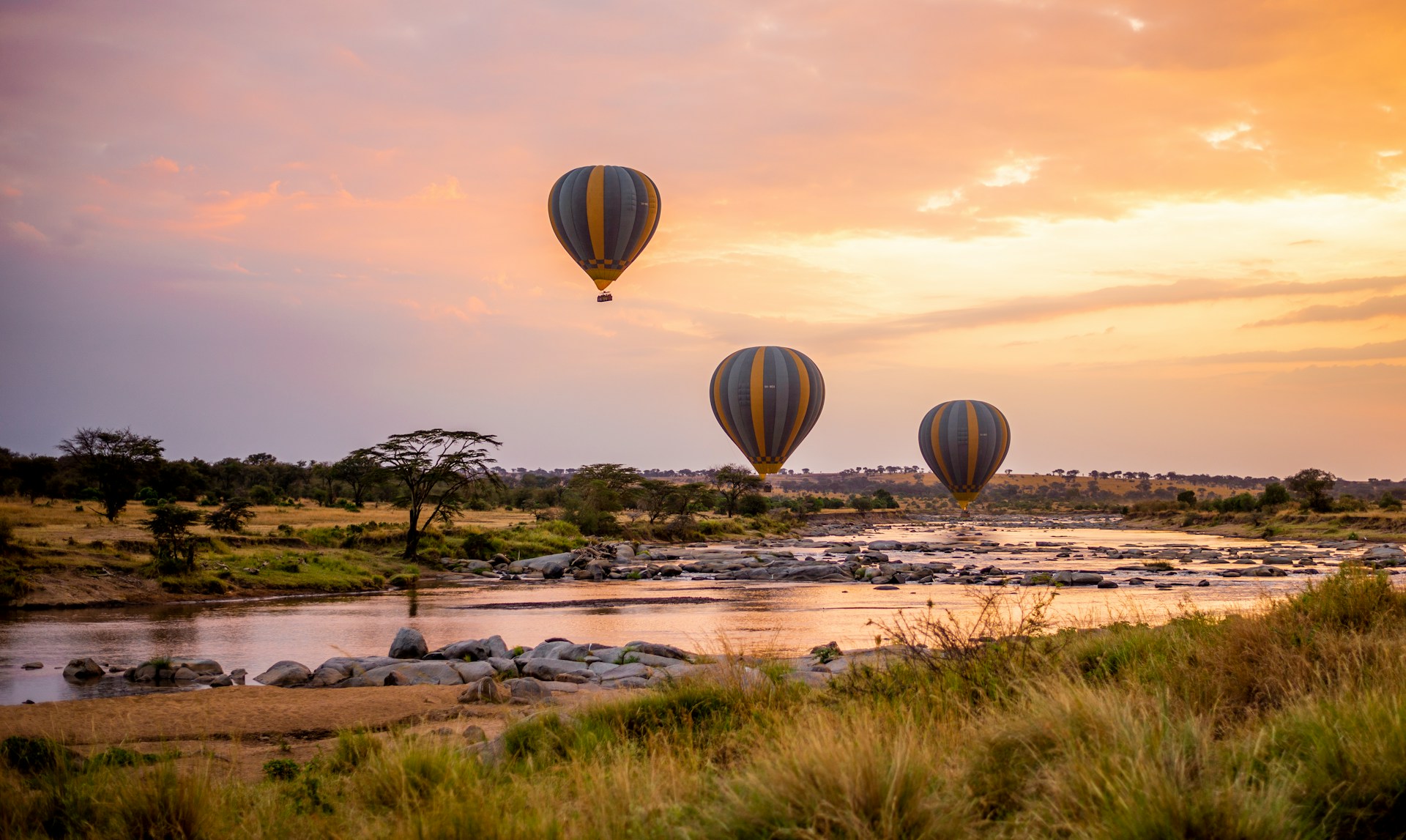
Hot air balloon safaris. Around USD 599 per person for an hour over the plains at dawn, finishing with a champagne breakfast. Flown from Seronera, Ndutu and Kogatende depending on season. Book well ahead in peak months.
Walking safaris. Permitted in designated wilderness zones with an armed ranger, mostly in the Moru and Lobo areas. Not available everywhere, so it needs planning into the itinerary rather than asking on the day.
Maasai and Datoga cultural visits. Arranged in the communities bordering the park at Loliondo and around Ngorongoro rather than inside the park itself.
Night drives. Not permitted inside the national park. Available in the bordering concessions such as Grumeti and Loliondo, which is worth a night if nocturnal species matter to you.
The Ngorongoro Crater. Not part of the Serengeti but almost always combined with it. A 260 square kilometre caldera with a resident population that does not migrate, so it delivers Big Five viewing in a single morning in any month.
WHERE TO STAY
Lodges and Camps in the Serengeti
The Serengeti is vast, and choosing the wrong region for your month is the single most common planning mistake. Where you sleep matters more here than in any other East African park.
Central Seronera
Resident game all year, the best leopard viewing, and the most lodge choice. The safe default if your dates fall outside the obvious migration windows.
Southern Plains and Ndutu
Where you want to be from December to March for calving. Mostly seasonal mobile camps that pack up when the herds leave.
Northern Serengeti and Kogatende
The base for the Mara river crossings from July to October. Books out a year ahead in peak season.
Western Corridor
Grumeti river country, best in June as the herds pass through. Quieter than the north and good value.
Mobile Migration Camps
Camps that relocate two or three times a year to follow the herds. More expensive but they put you where the animals actually are.
Ngorongoro Crater Rim
An hour from the park boundary, usually the night before or after the Serengeti. Cold at 2,200 metres, and the crater descent starts at dawn.
SAFARI PACKAGES
Safaris That Include The Serengeti
All private departures. Tell us your month and we will put you in the right region rather than the most convenient camp.
5 DAYS / 4 NIGHTS
5 Days Serengeti and Ngorongoro Safari
The endless Serengeti plains and a full morning on the Ngorongoro crater floor.
From $1,250 per person
7 DAYS / 6 NIGHTS
7 Days Kenya and Tanzania
The Masai Mara, Serengeti and Ngorongoro Crater in one crossing. Our most booked route.
From $1,450 per person

10 DAYS / 9 NIGHTS
10 Days Ultimate East Africa
Amboseli, the Masai Mara, the Serengeti and the Ngorongoro Crater at an unhurried pace.
From $2,300 per person
KEY QUESTIONS
Serengeti Safari, Key Questions
Three nights minimum, four or five if you want the north for river crossings. The park is ten times the size of the Masai Mara and moving between regions takes a full day by road, so short trips here waste most of their time in transit. Two nights only works if you fly directly to the region you want.
All year, in different places. December to March the herds calve on the southern plains. June sees them cross the Grumeti in the west. July to October they are in the north crossing the Mara river. November and December they move back south. There is no month when the migration is absent from the ecosystem, only months when it is far from where you booked.
The Serengeti is far bigger, feels wilder and has more lion. The Mara is more concentrated, which means shorter drives and more sightings per hour. Tanzania costs noticeably more per day because of park and concession fees. If you can only do one and have four days, the Mara is easier. With seven days or more, do both.
Fixed costs of park fees, concession fees and VAT come to around USD 150 per person per day before anything else. Budget camping runs USD 220 to USD 300 per day, mid range USD 350 to USD 550, and luxury mobile camps USD 600 upward. Our five day Serengeti and Ngorongoro trip starts at USD 1,250 per person.
Yes. Around USD 599 per person for an hour at dawn followed by a champagne breakfast on the plains. Flights operate from Seronera, Ndutu and Kogatende depending on the season. Book well in advance in peak months because capacity is limited.
Yes. A Kenyan visa or eTA does not cover Tanzania. Apply for the Tanzanian e-visa online before you travel. If your trip also takes in Uganda or Rwanda, note that the East Africa Tourist Visa covers those three but not Tanzania.
EXPLORE MORE
Pair The Serengeti With Other Destinations
The Serengeti is rarely visited alone. These are the four that combine with it most naturally.

Your Serengeti Safari Starts Here
Tell us your travel month and we will put you in the right part of the park rather than the most convenient one. We reply within 24 hours with a route and a clear price.
TAILOR MADE SAFARI
Want to Know More? Talk to Us
Create an unforgettable memory with a customised Kenya or Tanzania safari. Tell us how you like to travel and our safari experts will shape the route around you, with no obligation.
Phone: +254 736 992 608
Email: info@solasafaritravels.com