DESTINATION GUIDE // TANZANIA
Mount Kilimanjaro
Africa highest point at 5,895 metres and the tallest freestanding mountain in the world. No ropes, no technical climbing, just altitude and patience.
5,895m
SUMMIT HEIGHT
5-9 days
TREK LENGTH
7
ROUTES
65%
SUMMIT SUCCESS
Jan-Mar
BEST MONTHS

GENERAL OVERVIEW
About Mount Kilimanjaro National Park
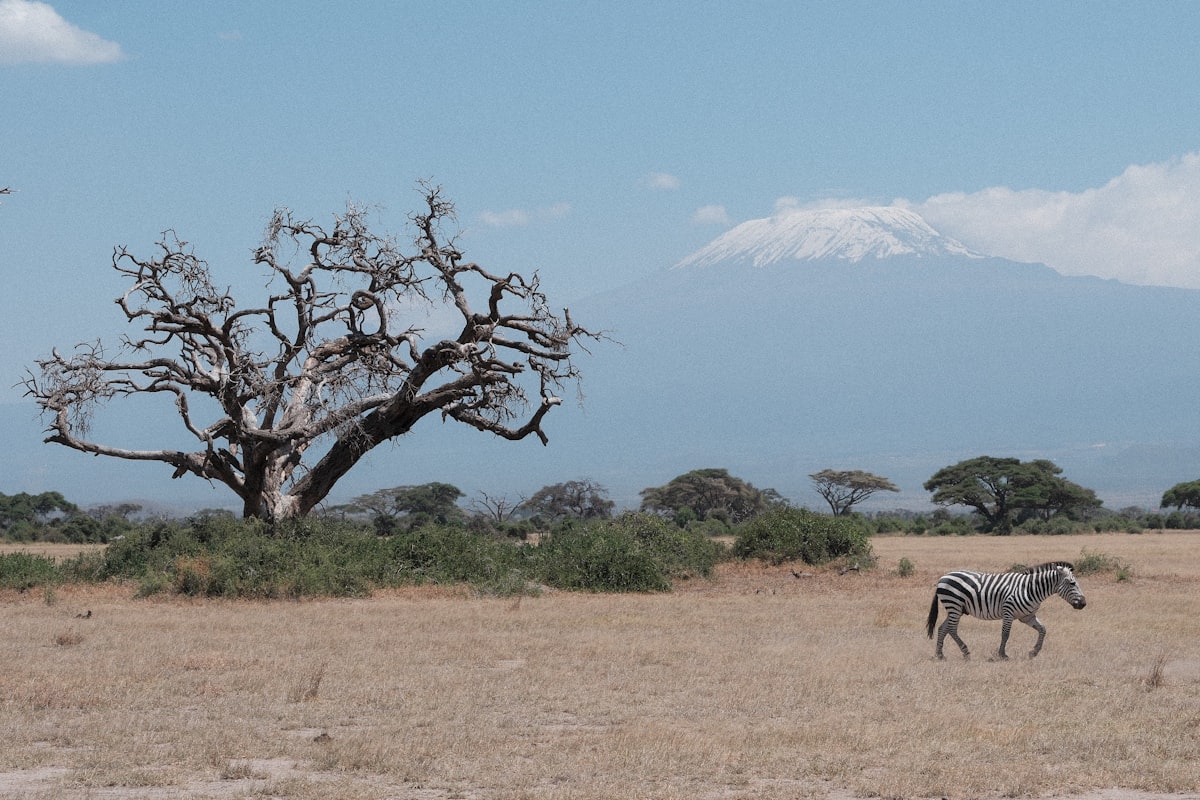
Kilimanjaro is the highest mountain in Africa at 5,895 metres and the tallest free-standing mountain in the world, rising almost five kilometres straight off the plains of northern Tanzania without a range around it. The national park covers 1,688 square kilometres above the 2,700 metre treeline and was inscribed as a UNESCO World Heritage Site in 1987.
The mountain has three volcanic cones. Kibo is the highest and holds Uhuru Peak, the summit. Mawenzi at 5,149 metres is a jagged, technical peak few people climb. Shira is the oldest and has collapsed into a plateau. Kibo is dormant rather than extinct, with fumaroles still active in the crater.
What makes Kilimanjaro unusual among high peaks is that it needs no technical skill. There is no rope, no crampons on the standard routes and no scrambling. It is a walk, and the entire difficulty is altitude and endurance. That is why around 35,000 people attempt it each year and why roughly two thirds of them get to the top.
CLIMBING ROUTES
Choosing How To Go Up
Lemosho. Seven or eight days from the west, the most scenic route and the best summit success rate, around 90 per cent on eight days. Our usual recommendation.
Machame. Six or seven days, known as the Whiskey route. Popular, beautiful and steeper, with a good success rate on seven days and a noticeably lower one on six.
Marangu. Five or six days, the only route with hut accommodation rather than tents, known as the Coca-Cola route. It has the lowest success rate because the ascent profile is fast, and the same path is used up and down.
Rongai. Six or seven days from the north near the Kenyan border, the driest route and the best choice in the rainy months.
Northern Circuit. Nine days, the longest route, circling the northern slopes. The highest success rate of all and the quietest trails.
Umbwe. Six days, steep, direct and for experienced trekkers only. Low success rate.
Days on the mountain matter more than fitness. Every extra day of acclimatisation raises your odds materially.
WILDLIFE AND LANDSCAPES
What You Walk Through
Five climate zones in five days. Cultivated farmland at the base, then montane rainforest to about 2,800 metres, then heath and moorland with giant lobelias and groundsels, then alpine desert, then the arctic summit zone of rock, ice and glacier.
The glaciers. The Furtwangler Glacier and the northern and southern icefields on Kibo have lost the overwhelming majority of their extent since 1912 and continue to retreat. Current projections suggest the summit ice may be gone within decades.
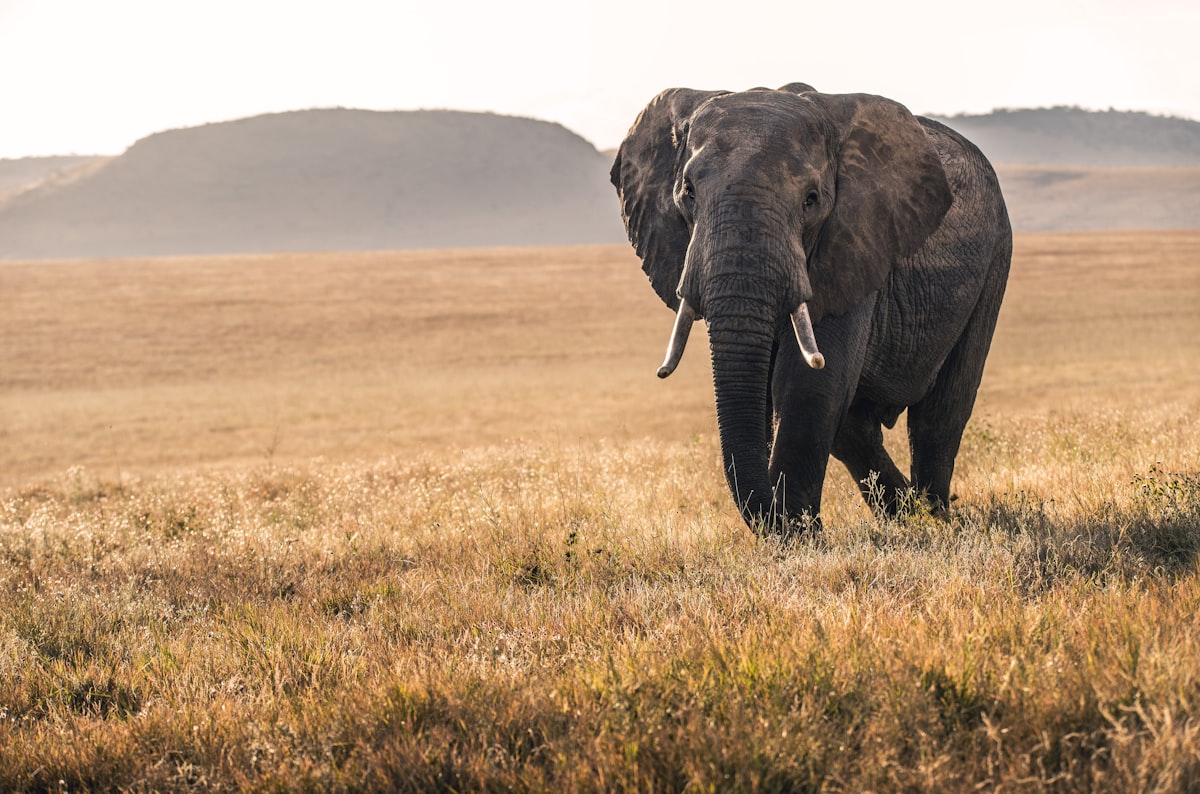
Wildlife. Blue monkey and black and white colobus in the rainforest, plus bushbuck and duiker. Elephant, buffalo and leopard occur on the lower slopes but are rarely encountered on the trekking routes. Above the treeline the four striped grass mouse and the white necked raven are the animals you will actually meet.
Birds. Around 180 species, including the malachite sunbird feeding on the lobelias at altitude and the alpine chat near the high camps.
PERMITS AND FEES
What A Climb Costs
Park entry for non-residents over sixteen is around 70 US dollars per person per day excluding VAT, with children aged five to fifteen at roughly 20 dollars. On top of that come camping fees of about 50 dollars per person per night, or hut fees on the Marangu route, a rescue fee of around 20 dollars per climb and guide and porter entry fees. VAT at 18 per cent applies to Tanzanian park charges.
In practice nobody pays these separately. Climbs are sold as all inclusive packages, and a reputable seven or eight day climb runs from roughly 2,200 to 4,500 US dollars per person depending on route, group size and operator standard.
Be wary of anything under about 1,800 dollars. Park fees alone account for a large share of that figure, and the shortfall almost always comes out of porter wages, food quality or safety equipment.
Independent climbing is prohibited. A licensed operator, a registered guide and a porter team are compulsory.
WHY CLIMB KILIMANJARO
What The Mountain Is Known For
It is the highest point in Africa that an ordinary person can walk to. No rope, no crampons, no technical skill on the standard routes. That combination is genuinely rare among the world’s big mountains and it is why Kilimanjaro draws people who would never call themselves mountaineers.
The five climate zones are the second reason. Walking from rainforest to arctic ice over a handful of days, passing through moorland full of plants that grow nowhere else, is a landscape transition nothing else in Africa offers.
And the summit itself. Standing at Uhuru at sunrise, with the curve of the plains below and the glaciers catching first light, is the image that draws most people and it delivers.
The honest caveat is that this is hard. Summit night is six to eight hours of walking in the dark at extreme altitude in sub zero temperatures, and roughly a third of climbers do not make it.
BEST TIME TO CLIMB
When To Go
January to mid March. Warmer, clearer and generally quieter than the mid year window. Occasional afternoon cloud and a higher chance of snow on the summit, which many people find more beautiful.
June to October. The main season. Dry, stable and the busiest, particularly July to September. Colder at night than the January window.
Late March to May, the long rains. The wettest and least advisable period. Trails are muddy, views are lost in cloud and hypothermia risk rises. Rongai in the north is the driest option if you must climb then.
November to mid December, the short rains. Afternoon showers, fewer climbers and lower prices. Workable with the right route.
Full moon dates are worth targeting for summit night, since the extra light on the Kibo scree is a real help.
GETTING THERE
How To Reach The Mountain
By air. Kilimanjaro International Airport takes direct flights from Amsterdam, Doha, Istanbul, Addis Ababa and Nairobi. It sits about 45 km from Moshi and 50 km from Arusha.
Moshi. The traditional base town at the foot of the mountain, forty five minutes from the airport and closest to the Marangu and Machame gates.
Arusha. An hour from the airport, better connected for safari itineraries and the usual base if you are combining a climb with the northern circuit.
To the gates. Marangu is about an hour from Moshi, Machame forty five minutes, Lemosho and Londorossi two to three hours to the west, and Rongai around four hours to the north.
Operators handle all gate transfers as part of the package. Arrive at least one full day before your climb starts.
WHERE TO STAY
Before, During And After
On the mountain. Tents on every route except Marangu, which uses huts at Mandara, Horombo and Kibo. Tents, mats and mess facilities come with the package. A good operator supplies proper sleeping mats and a dining tent, which is one of the clearest differences between price tiers.
In Moshi. Kaliwa Lodge on the mountain’s southern slopes, Weru Weru River Lodge and a wide range of climber focused hotels.
In Arusha. Rivertrees Country Inn, Arusha Coffee Lodge and Onsea House, all comfortable for the night before and the recovery night after.
Afterwards. Most climbers head either to the Serengeti and Ngorongoro or straight to Zanzibar. Both work, and a rest day in between is worth building in.
SAFETY AND TRAVEL TIPS
What To Know Before You Go
Altitude is the whole game. Fitness helps with comfort but acclimatisation determines whether you summit. Choose seven days minimum, eight if you can. The five day Marangu climb has by far the worst record and we do not recommend it.
Altitude sickness. Headache, nausea and breathlessness are common. HACE and HAPE are rare but life threatening. A good operator carries a pulse oximeter, does twice daily health checks and carries emergency oxygen. Ask before booking.
Porter welfare. Look for operators registered with the Kilimanjaro Porters Assistance Project, which sets standards on load limits, wages, food and shelter. Cheap climbs are cheap because porters absorb the cost.
Kit. Four season sleeping bag, insulated jacket, waterproof shell, broken in boots, headtorch, gloves and sun protection. Most of it can be hired in Moshi.
Tipping. Customary and significant, roughly 250 to 350 dollars per climber across the crew for a seven day climb. Budget for it separately.
Insurance. Must cover trekking to 6,000 metres and helicopter evacuation. Standard travel policies usually do not.
TOURS WITH US
Climbing With Sola Safari Travels
We book Kilimanjaro with licensed Tanzanian operators registered for porter welfare, and we default to Lemosho over eight days because the success rate is the highest of the popular routes and the scenery is the best. Where a schedule is tight we use Machame over seven, and we will say plainly if a five day climb is being considered that the odds are poor.
Where the calendar allows we recommend a Mount Meru climb in Arusha National Park first, which is excellent acclimatisation and a fine mountain in its own right.
Park fees, camping fees, rescue fees, crew, food and gate transfers are all covered in one package price, and we plan the safari or Zanzibar leg either side of it so the whole trip runs on one booking.
SAFARI PACKAGES
Safaris That Include Kilimanjaro
A Kilimanjaro climb is planned as its own trip, usually with a safari or Zanzibar leg either side. All departures are private.

KEY QUESTIONS
Kilimanjaro Safari, Key Questions
Technically it is a walk. There is no rope, no crampons and no scrambling on the standard routes. The difficulty is altitude and endurance, particularly summit night, which is six to eight hours in the dark at extreme altitude in sub zero temperatures. Around two thirds of climbers reach the top.
The nine day Northern Circuit, followed by Lemosho over eight days at around 90 per cent. Machame over seven is good. The five day Marangu route has by far the lowest success rate because the ascent is too fast to acclimatise properly.
Roughly 2,200 to 4,500 US dollars per person for a reputable seven or eight day climb, all inclusive of park fees, camping fees, rescue fee, guides, porters, food and gate transfers. Park entry alone is about 70 dollars per day plus camping fees and VAT. Anything under about 1,800 dollars usually comes out of porter wages or safety equipment.
January to mid March is warmer and quieter. June to October is drier and busier. Late March to May is the long rains and the least advisable. November to mid December works with the right route. Targeting a full moon helps on summit night.
Reasonably fit, but acclimatisation matters more than fitness. Very fit people fail on fast routes and moderately fit people summit on slow ones. The single biggest thing you control is how many days you spend on the mountain.
It is worth checking before you book. Look for operators registered with the Kilimanjaro Porters Assistance Project, which sets limits on loads and standards for wages, food and shelter. We only use operators who meet those standards.
EXPLORE MORE
Pair Kilimanjaro With Other Destinations
The mountain sits at the eastern end of the northern circuit, with the safari parks a few hours west.

Tarangire National Park
Baobabs and elephant herds, the usual first safari stop after a climb.
Your Kilimanjaro Safari Starts Here
Tell us your dates and group size. We will reply within 24 hours with a tailor made proposal and a clear price.
TAILOR MADE SAFARI
Want to Know More? Talk to Us
Create an unforgettable memory with a customised Kenya or Tanzania safari. Tell us how you like to travel and our safari experts will shape the route around you, with no obligation.
Phone: +254 736 992 608
Email: info@solasafaritravels.com